|
Taiwan has done an excellent job managing COVID since 2019 and has seen a number of "COVID refugees" as a result. Most of these people have a family or business connection here and returned or stayed due to Taiwan's implementation of solid science-based policies (our VP at the time was an epidemiologist) developed by the Central Epidemic Command Center (we only had 853 deaths in a country of 23 million). Now having weathered the storm with severity of strains trending down globally, many of these COVID refugees are departing Taiwan, which means that us residents are losing friends who have been a part of our lives the last few years. My kids have lost friends at school and recently I said goodbye to someone who I've spent a significant amount of time birding with in the last year and had become a friend. He was well-connected in the local birding community and put me on to a number of local rarities as well as invited me along on pelagic trips (a type of birding that is only just getting off the ground in Taiwan). Before he departed in March, we decided to make on last day trip together. After some discussion, we decided to target the low and mid-elevation woodlands and forest of Liugui District in Kaohsiung. This area is only a little over an hour's drive from my home and provides some excellent birding. While Kaohsiung is named for the major coastal city with the island's largest port, it also includes the massive Laonong River Valley and even stretches all the way up the slopes to the 3,952m peak of Yushan, the highest peak in East Asia. One of the first roads that I started birding when I arrived in Taiwan in 2015 rises out of the Laonong Valley and follows the Baoshan ridge leading up into the Central Mountain Range and Tengchih Forest Recreation Area. After a decade of reconstruction following a major landslide, the last kilometer of road was open for a few months in 2021 before falling again and being subsequently closed. There is a diversion road around the landslide though only experienced drivers should attempt to pass. I picked up my friend at the bus station in Nanzih around 5:15AM and we headed for Liugui. The first hour of the drive is scenic, but not great for birding. We made a brief stop for coffee and food at 7-11 (7-11's utility to the Taiwan birder deserves its own post at some point). We rolled down windows and started birding properly as we started up the road to Tengchih from Liugui in the early dawn light. The lower section of this road yielded a number of common Taiwan mid-elevation endemics including White-eared Sibia, Taiwan Yuhina, Taiwan Yellow Tit, Black-throated Tit and Green-backed Tit in addition to other common species like Swinhoe's White-eye, Taiwan Barbet and Black-naped Monarch. Heard-only species along this section included Taiwan Scimitar-Babbler, Rufous-capped Babbler, Steere's Liocichla, and an Oriental Cuckoo (first of the year for us both). 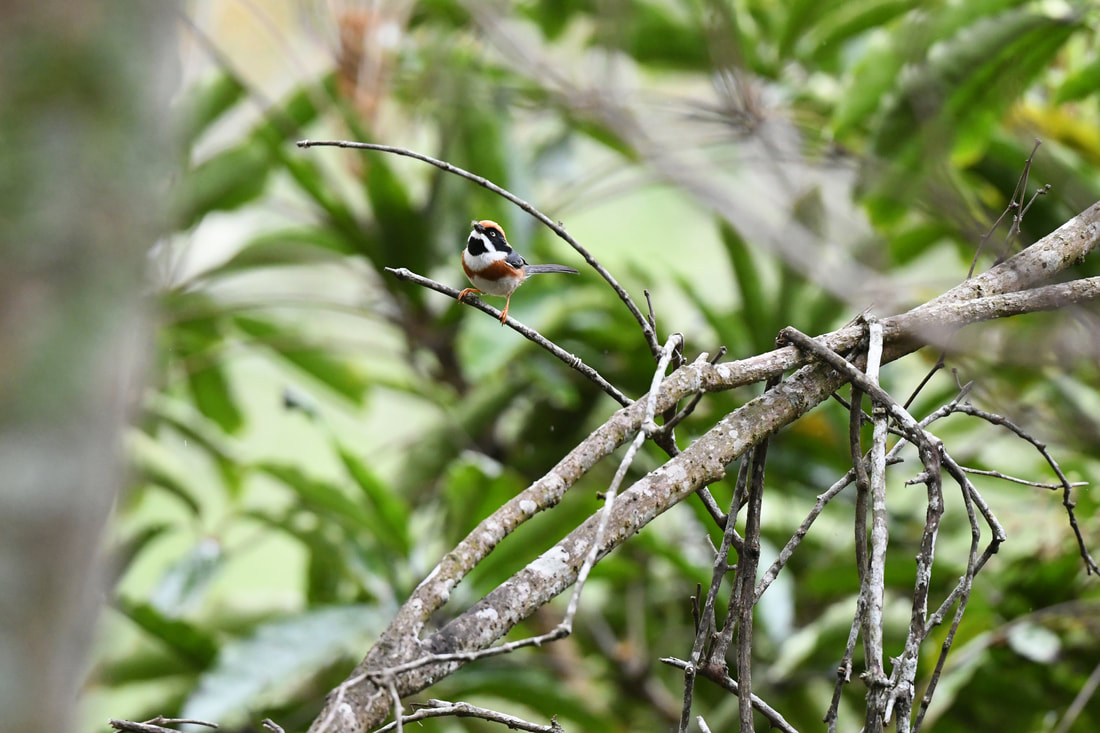 Black-throated Tit (Aegithalos concinnus) We drove past Tengchih and around another landslide diversion, arriving at the control point for the Shishan Forest Road (石山林道), one of the best locations for mid-elevation birding that I've found anywhere in Taiwan. The road passes through a bit of cedar plantation forest early on, but the vast majority is temperate dry broadleaf forest and the steep slope of the hillside allows for clear views out across the canopy. This road now only leads to an Endemic Species Research Institute station and ends abruptly thereafter in another landslide. Due to this, the road is virtually untrafficked. The entire time that we were there we passed a single truck picking up through-hikers on one of the long multi-day treks through the high mountains. From the control point to the end is ~8km. Along the way in addition to earlier species we saw both Taiwan Bamboo-Partridge and Swinhoe's Pheasant on the road, Gray-chinned Minivet, Rufous-faced Warbler, both Morrison's and Dusky Fulvettas, Vivid Niltava, Taiwan Whistling-Thrush, Black-throated Tit, and Crested Serpent-Eagle in addition to hearing Taiwan Partridge, Gray-headed Woodpecker, and the low-pitched throb of Ashy Wood-Pigeon. On the way back out we added Black-necklaced Scimitar Babbler. 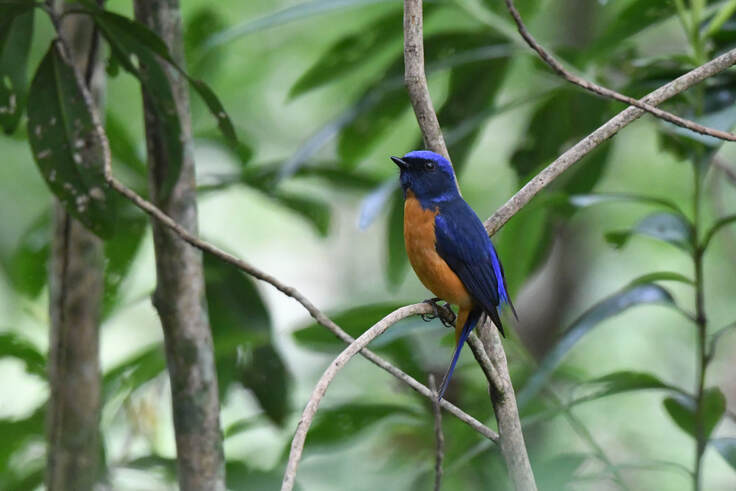 Vivid Niltava (Niltava vivida vivida) We stopped in the aboriginal village of Erjituan on the way out to bird an orchard and coffee plantation that I've had great success with in the past. The spot continued to produce great birds on this visit, and in less than ~2km we had added White-bellied Green Pigeon, House Swift, Eurasian Jay, Barn Swallow, Black Bulbul, Rusty Laughingthrush, Daurian Redstart, Olive-backed Pipit, and Little Bunting in addition to a nesting pair of Gray Minivets and heard-only White-tailed Robin. We also had a brief glimpse of a bush warbler, but were unable to make an ID in spite of a photo. 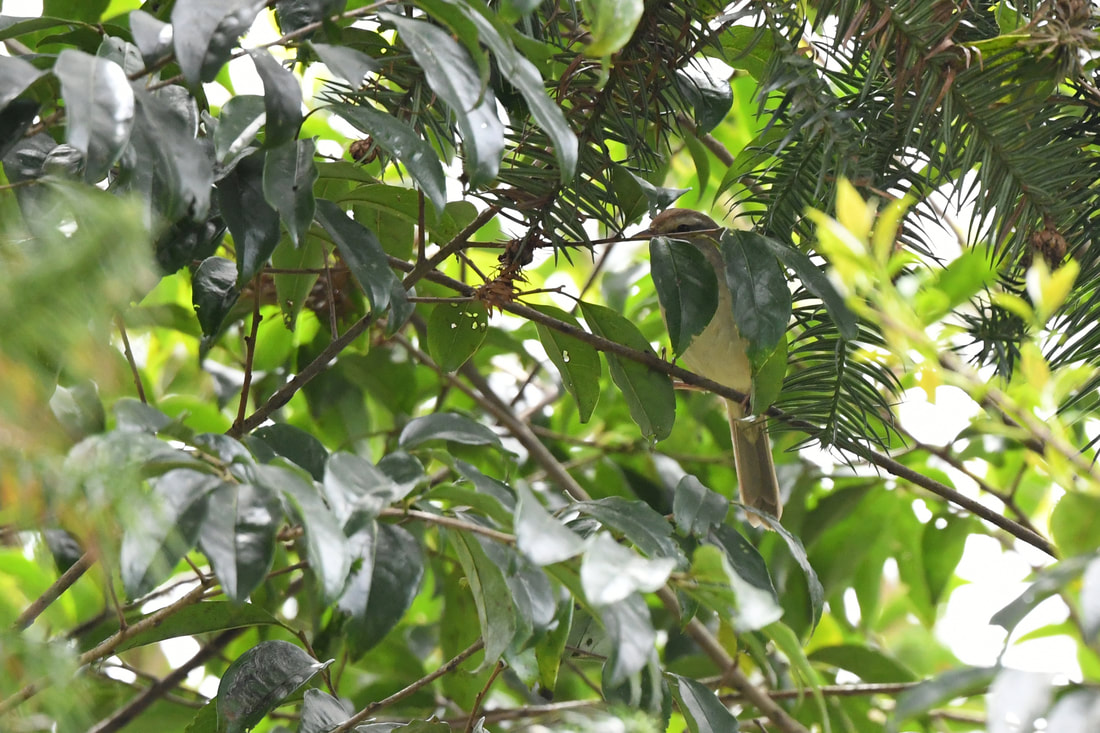 Horornis spp. - so difficult to differentiate Bush Warblers when they're not showing well and silent. 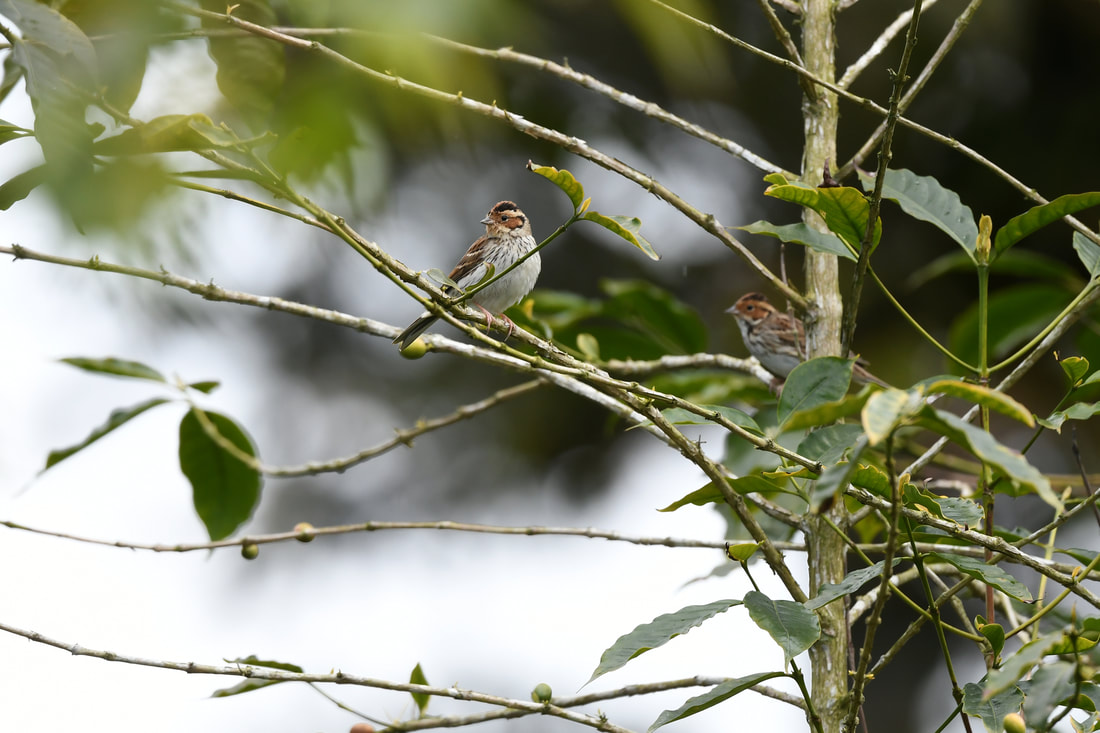 Little Buntings (Emberiza pusilla) By this time it was mid-day and we decided to descend back down to the Laonong River Valley and stop at a location along the base of the escarpment known for Large Cuckooshrike. An hour-long search in the heat of the day turned up Maroon Oriole as well as both Bronzed and Black Drongo (one of the few places I've seen both), and several common low elevation species like Gray-Treepie, Light-vented Bulbul, a flock of Brown-headed Thrush, and a White Wagtail (ssp. leucopsis). A distinctive loud whistle alerted us the presence of our main target Large Cuckooshrike. 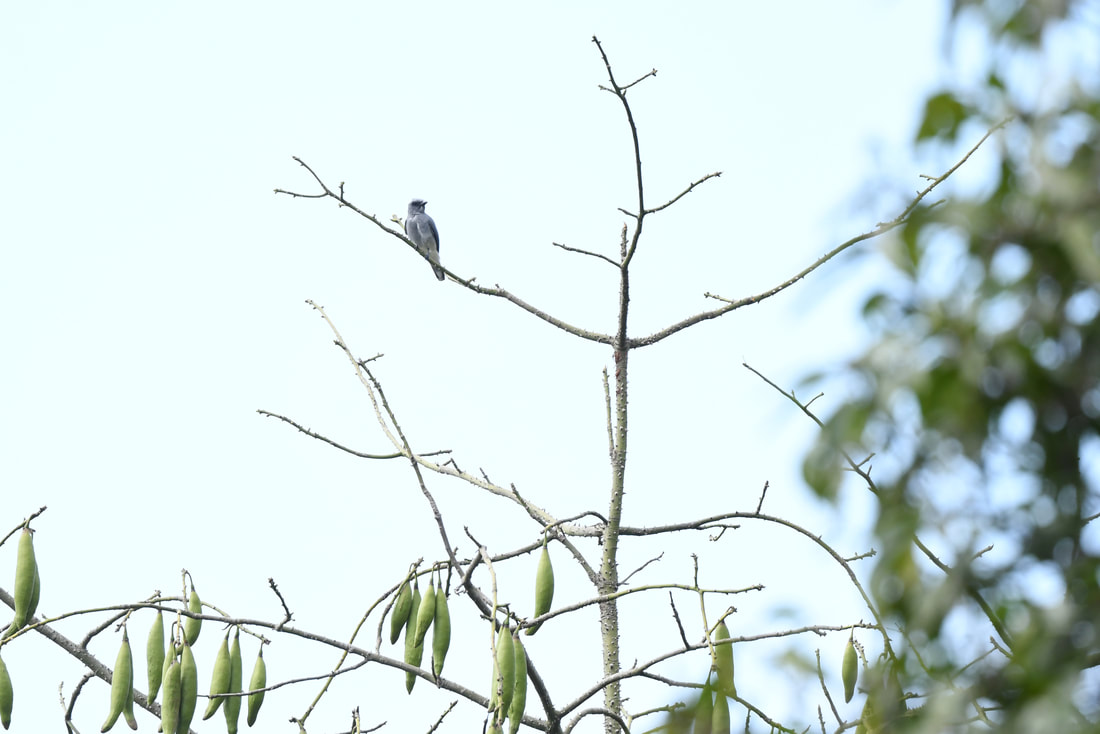 Large Cuckooshrike (Coracina macei) With daylight left, we decided to make our final stop at Luigui Xinwei Forest Park, characterized by large mature deciduous trees towering over a short-cropped grass lawn. This combination of habitats, along with the geography of the place--the southernmost point of the Yushan Mountain Range before the Laonong/Gaoping Floodplain--makes this an excellent trap during fall migration. Outside of migration, Xinwei is great habitat for flycatchers and minivets. We spent 90 minutes wandering around and added Ashy Minivet, Ashy Drongo, and both Gray-streaked and Asian Brown Flycatchers to the list for the day. We also had more common species like Red Collared-Dove, Eastern Spotted Dove, Crested Goshawk, White-rumped Shama, Brown Shrike, Gray-capped Pygmy Woodpecker, Eastern Cattle Egret, and Malayan Night-Heron (which seems to inhabit virtually every park in Taiwan).
After finishing our loop around Xinwei, we returned to the car for the 45 minute drive back to the bus station where I dropped off my friend, who left the following day for the USA just in time for the spring migration! It was great to have one last hurrah together enjoying some great birds, cool air, and magnificent forest vistas!
For anyone interested, here is a link to the day's Trip Report in eBird.
0 Comments
|
 RSS Feed
